AI Ad Creatives: How to Build a Creative Engine That Never Stops

Most marketers assume ad fatigue is the problem. It is not.
The real problem is that most teams cannot produce new creative fast enough. By the time a winning ad starts to slip, the next batch is usually not ready, and that gap is where the damage happens:
- CPM rises
- CTR drops
- Conversion rates decline
- Customer acquisition costs climb
- Campaign growth slows The brands that scale do not simply swap in a new ad when the old one stops working. They build a system that continuously generates, tests, and improves creative.
This guide walks through how to build an AI-powered creative engine that keeps your campaigns fresh, scalable, and competitive.
Want your next winning ad ready before the last one fades? Start free with 100 credits →
Why Ads Stop Working
Every ad follows a similar lifecycle.
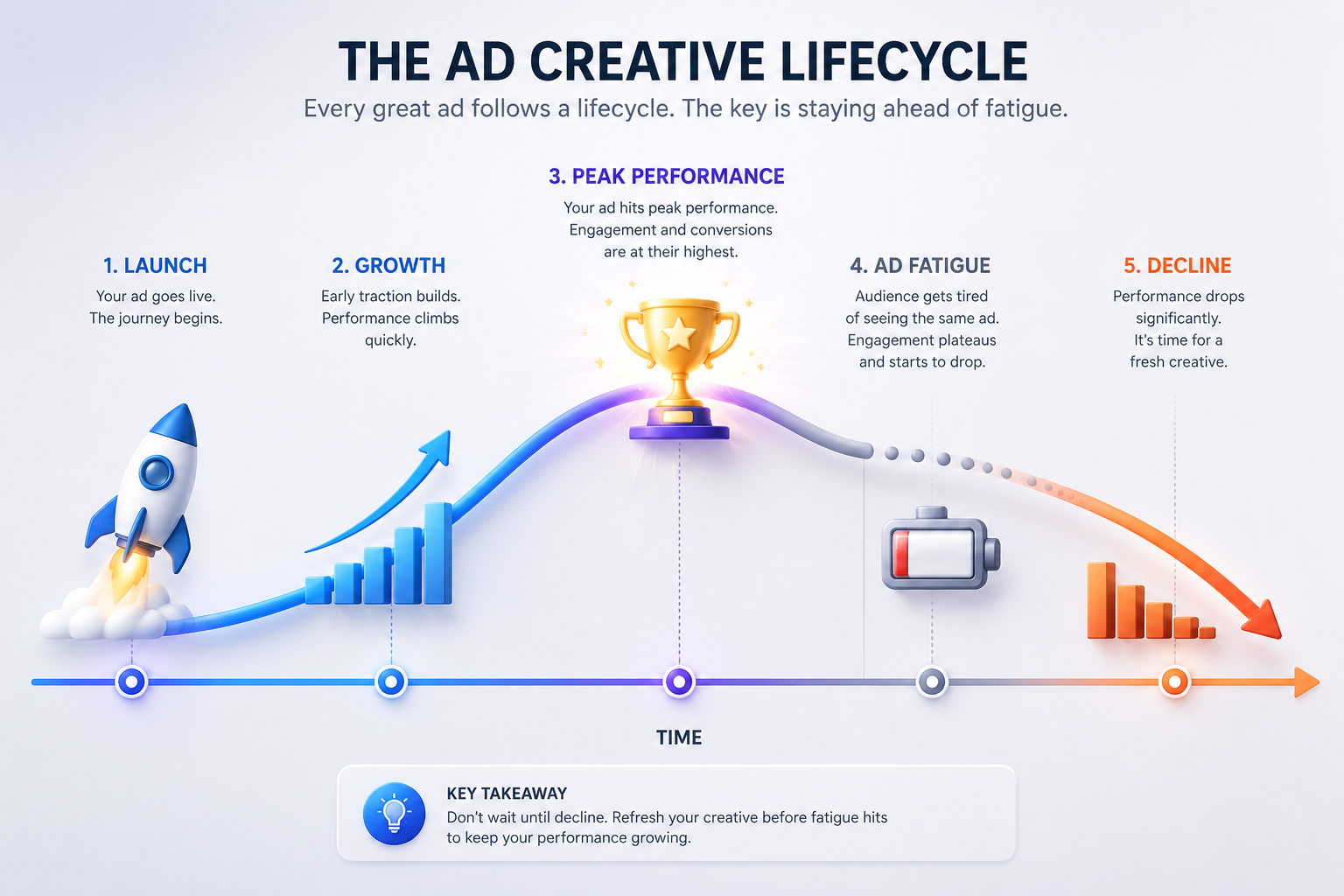
The goal is not to avoid ad fatigue forever. The goal is to always have the next creative ready before fatigue becomes a problem.
The Hidden Cost of Ad Fatigue
When performance starts to decline, most marketers look at surface-level metrics. The real cost usually runs deeper. Ad fatigue tends to bring:
- Higher CPMs
- Lower CTRs
- Higher CPCs
- Weaker conversion rates
- More expensive customer acquisition
- Slower scaling Worse, many teams only notice a creative is exhausted after performance has already dropped sharply.
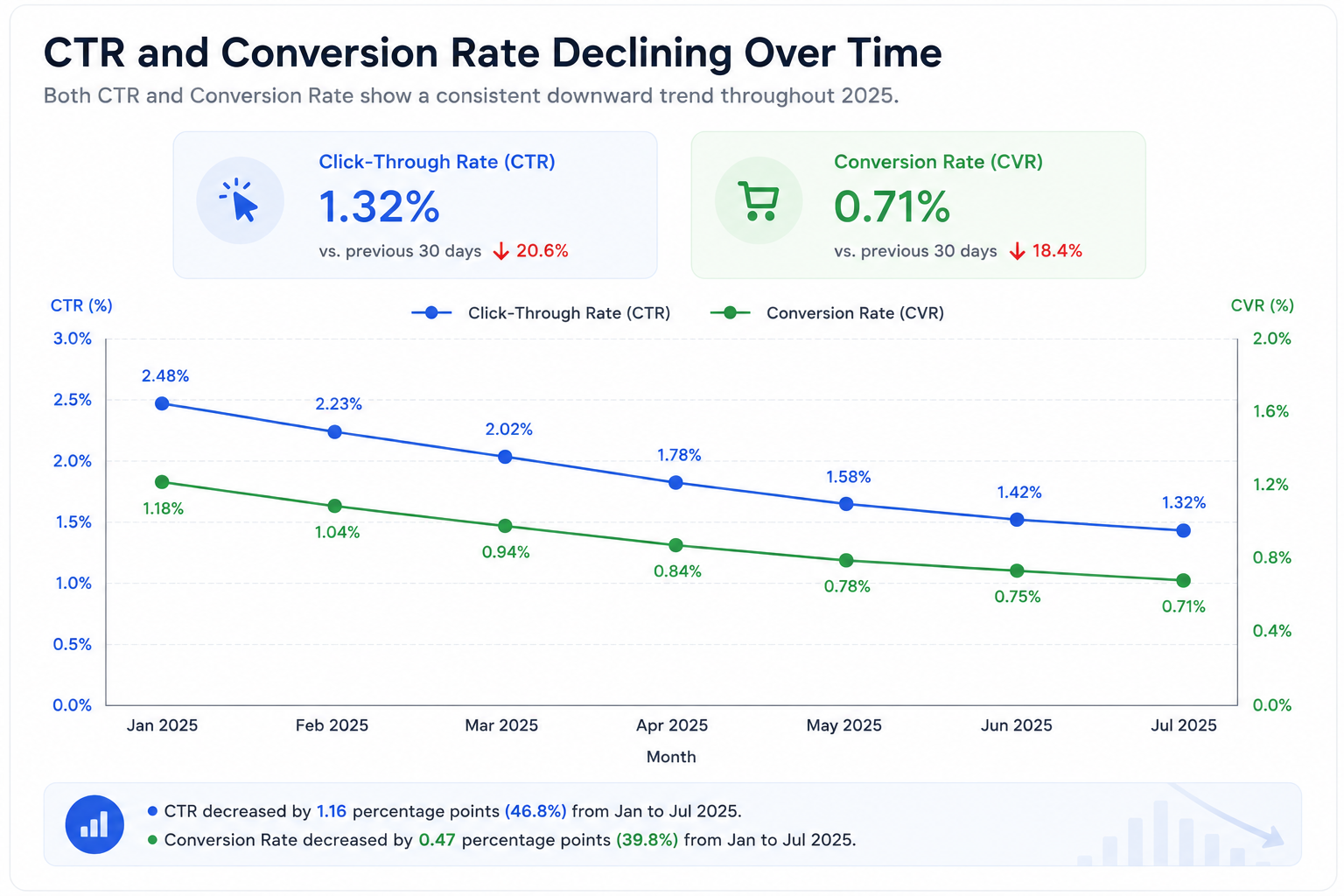
That delay opens a gap between creative performance and creative production, and that gap is exactly where growth stalls.
Why Traditional Creative Production Cannot Keep Up
Traditional ad production is slow, fragmented, and resource-heavy. A typical workflow looks something like this:
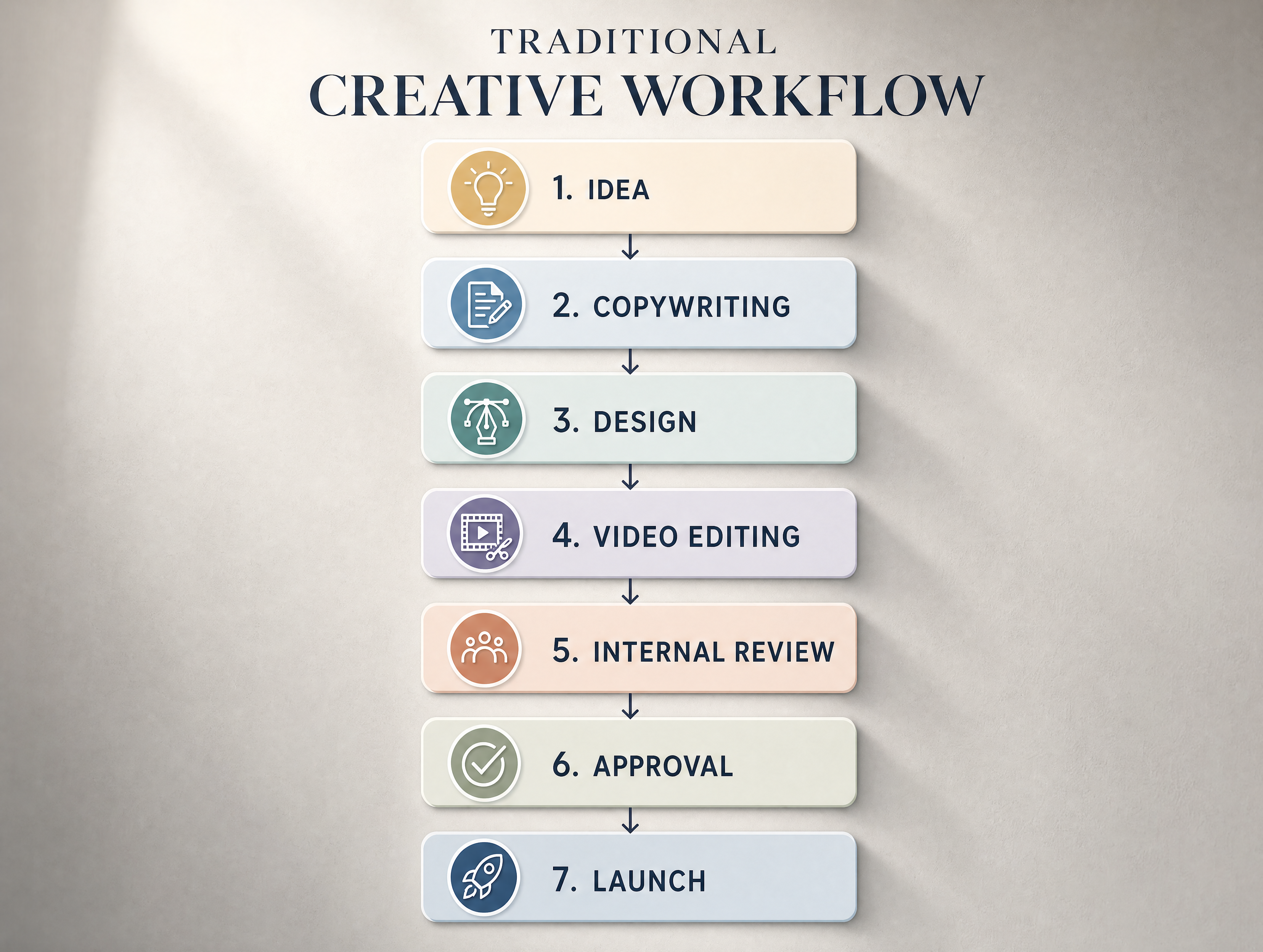
The whole process can take days or weeks. Meanwhile, ad platforms move in real time. By the time a replacement is approved, the original ad may have already peaked and declined. Modern marketing needs a faster system.
Stop Creating Ads. Start Building a Creative Engine.
Most businesses think in campaigns. The most successful advertisers think in systems.
Rather than producing one ad and hoping it performs, they build a repeatable process that constantly turns out new creative variations. We call that a creative engine.
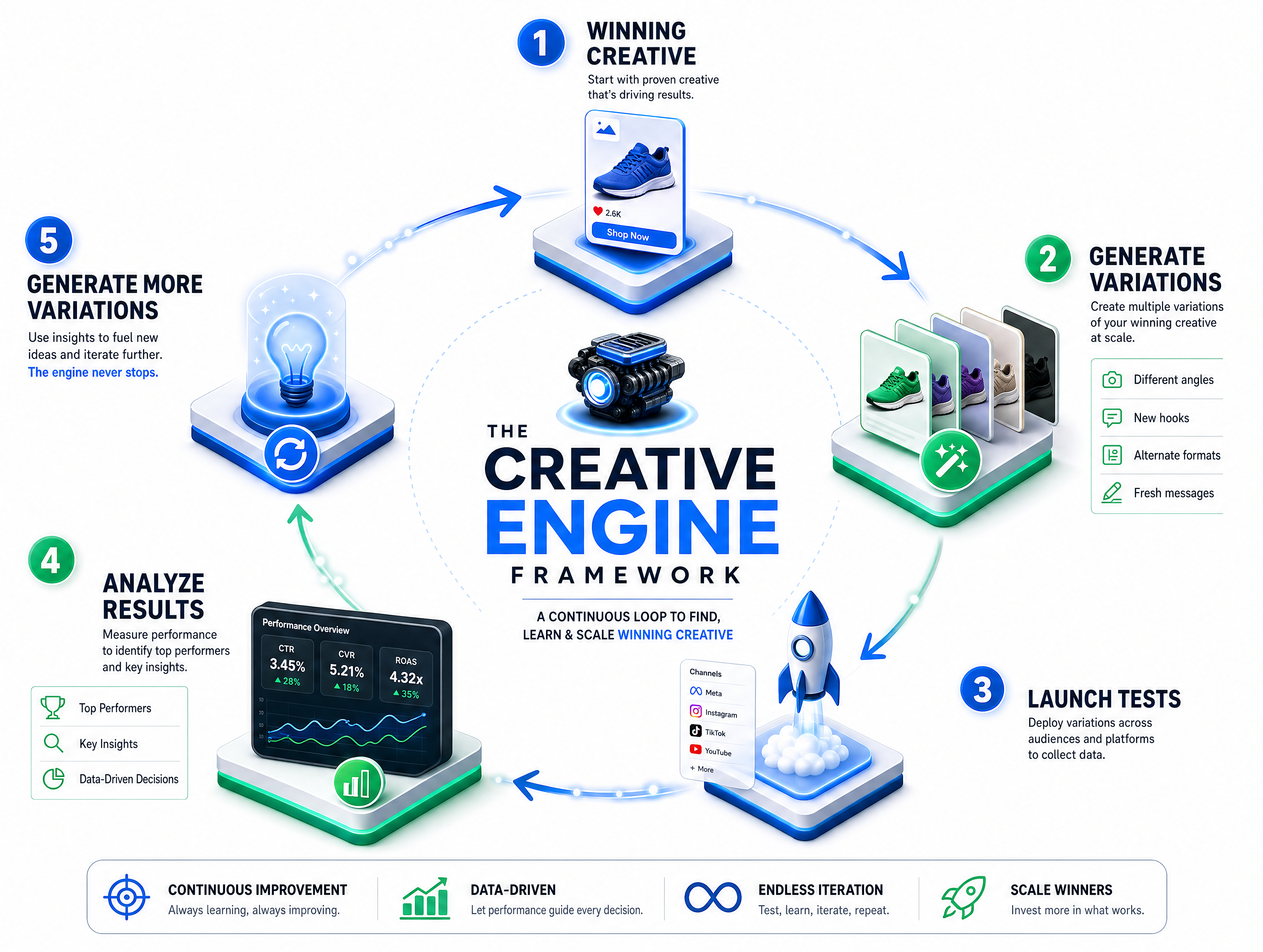
The cycle never stops. Each winning ad becomes the starting point for the next generation of creative, and over time the system grows more efficient, more scalable, and more profitable. ThankYou AI is built to run exactly this kind of engine.
The Five Creative Variables Every Advertiser Should Test
One of the biggest mistakes marketers make is changing everything at once. Test one variable at a time instead, so you can see what actually moves performance. Here are five of the most valuable variables to experiment with, and every example clip below was produced in ThankYou AI.
1. Visual Style
The same product can be presented in completely different ways:
- Luxury advertising
- Lifestyle photography
- UGC-style content
- Minimalist branding
- Cinematic storytelling
Each style attracts a different audience and triggers a different emotional response.
A single product image can become dozens of distinct ad concepts.
2. The Hook
The first three seconds decide whether anyone keeps watching, so even a small change to your opening can move performance dramatically. Common hook formats include:
- A question
- A surprising statistic
- A story-driven intro
- A pain-point opening
- A product demonstration
Sometimes the only difference between a winning ad and a losing one is a single sentence.
3. The Presenter
The message can stay the same while the messenger changes. Worth testing:
- A male voiceover
- A female voiceover
- An AI avatar
- A founder-led video
- An influencer-style delivery
Different audiences respond to different personalities and delivery styles.
4. Background and Environment
Changing the setting can completely change how a product feels:
- An office
- A home
- An outdoor lifestyle scene
- A professional studio
Without touching the product itself, you can create entirely new advertising experiences.
5. Platform Format
Every platform comes with different user behavior, and a creative built for TikTok will not necessarily perform the same on Instagram Reels or YouTube Shorts. Strong advertisers adapt winning concepts into multiple formats:
- TikTok vertical video
- Instagram Reels
- YouTube Shorts
- Facebook feed ads
One idea can become many assets.
Ready to build your own creative engine? Sign up with extra 100 credits →
Building a Creative Engine with ThankYou AI
The challenge is not generating one great ad. It is generating new ads consistently, and that is where a single, unified AI workflow earns its keep.
Instead of jumping between separate image tools, video editors, audio generators, and workflow platforms, ThankYou AI brings the whole process into one workspace. You can take a winning concept and spin up the next batch of variations: new visual styles, new hooks, new presenters, new formats, without losing time to tool-switching.
That is what turns a one-off ad into a repeatable system.
The Future of Advertising Is Infinite Creativity
Advertising used to look like this:
1 Campaign
1 Creative
1 Winner
Today it looks like this:
1 Campaign
100 Creatives
10 Winners
The brands that grow fastest are not necessarily the ones with the biggest budgets. They are the ones that can generate, test, learn, and iterate the fastest.
AI does not just help you create better ads. It helps you build a system that produces better ads continuously. Once creative production stops being a bottleneck, advertising becomes a game of experimentation rather than limitation.
The future belongs to teams that can create endlessly, test rapidly, and adapt constantly. That is the power of a creative engine.
Start creating endlessly. Try ThankYou AI with 100 free credits →
常见问题
Frank is a growth-focused operations and marketing professional with expertise in product data engineering. He specializes in turning user insights into scalable growth strategies. At THANKYOU AI, he leads operations, marketing, and growth efforts, leveraging data to shape product decisions and connect innovation with the audiences that need it most.